


Compatibility with a variety of materials and products
Choosing between several treatment methods
Implementation and testing support

What is the role of flame retardants?
Flame retardants are designed to reduce the flammability of a material, slow the spread of fire, and reduce the amount of smoke emitted during a fire. The treatment method varies depending on the type of material, the structure of the product, and the intended use.
The choice between impregnation, incorporation of the material into the product, or application of a coating layer is made based on the desired result and the appropriate tests.
Reducing the flammability of the material
Reducing the material's tendency to ignite and continue to burn
Slowing the spread of fire
Extending the time until the flame spreads across the product
Reducing smoke emissions
Adapting treatment aimed at reducing the product's contribution to smoking
Compliance with classification requirements
Selecting treatment and testing according to the application and requirement applicable to the product
The process of adjusting and reviewing treatment
1
Product definition and usage
Collect data on the raw material, shape, thickness and conditions of use
2
Defining the classification requirement
Fire requirement testing and appropriate testing for the product
3
Choosing a treatment method
Adjusting the impregnation, additive, varnish or paint according to the product
4
Sample preparation and application specification
Applying the treatment to conditions that represent the final product
5
Performing a test
Coordination of the test with the laboratory and the parties involved
6
Analysis of the result and continued treatment
Review the results and decide if further adjustment is required
How is the treatment method chosen?
The adjustment is made according to the type of material, thickness and shape of the product, conditions of use, appearance requirements, method of application, and the fire classification required after testing.
Sampling, application and testing support
To obtain a representative result, a match between the material being tested and the final product is required, a proper sample preparation, and application according to specifications. Support can include coordination between the manufacturer, the application team, and the testing laboratory.
Flame retardant treatment methods

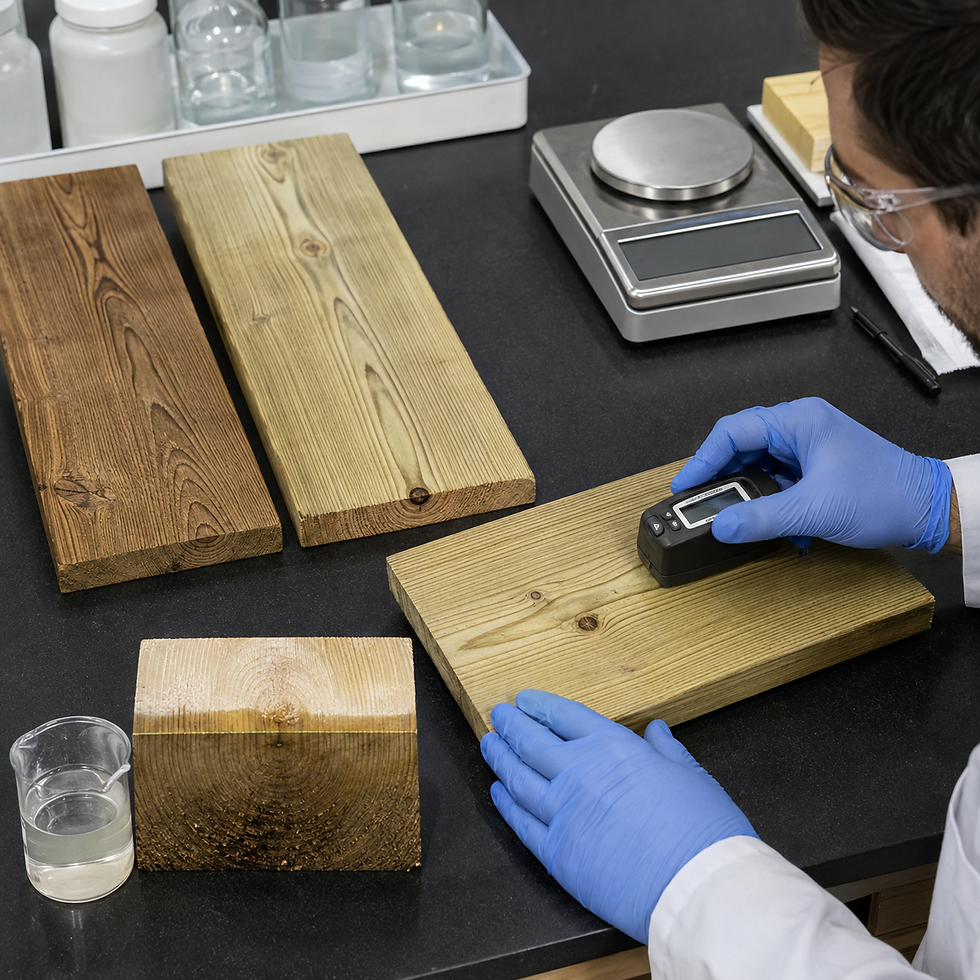
Impregnation with flame retardant material
Introducing an active ingredient into an absorbent material and then drying it.
.png)
Incorporating the inhibitor into the product
Mixing the inhibitor into the plastic, resin or raw material during production.

Clear varnish will be heat-treated
A decorative coating that reacts to heat and keeps the flame and oxygen away from the substrate.
Heat-inflated paint system
A coating that creates an insulating layer when exposed to heat and reduces the material's contribution to combustion.
Our Specialties
Compatibility with the material and product
Choosing a method based on the product characteristics and intended use
Introduction to different treatment methods
Examination of impregnations, additives and coatings.
Connecting the application to the test
Preparing a sample that represents the final product
Escort between the parties
Coordination between the manufacturer, the implementer and the laboratory.


Smoke and fire curtains
Guy's engineering and technical expertise and excellent management experience has been essential in driving forward our business and increasing sales of our range of smoke and fire curtains in Israel.

Oren Avshalom
Director of Safety and Hygiene Engineering Department
I would like to thank you for your cooperation and professional assistance over the years in the various projects you have carried out at Clalit institutions, as well as in the ad hoc consulting and professional lectures you have given to various professional forums at Clalit.
Your professional knowledge and experience are evident and have contributed greatly to the advancement of the field of fire safety.
Unique engineering solutions in the field of passive fire protection
Our company performed the engineering design and execution management for upgrading the fire resistance of the load-bearing concrete elements in the lower half of the "Davidoff Cancer Center" building at Beilinson Hospital.
We were very impressed by the fruitful collaboration, the precise and sensitive management that combined exceptionally high engineering capabilities.
Collaboration in the field of flame retardant testing at the Standards Institute of Israel
I would like to personally thank you for the fruitful and professional cooperation during the inspection at the Standards Institute of Israel that we were required to perform by the various authorities. The cooperation was between our company's installation team and the Standards Institute personnel, which you successfully managed.
Cooperation in the field of protecting load-bearing steel structures
I would like to personally thank you for the fruitful and professional cooperation, which included providing a professional and creative solution to protecting complicated elements under complex access conditions, across hundreds of tons of steel.
Frequently Asked Questions
A material or treatment system designed to reduce flammability, slow the spread of fire, and reduce the product's contribution to smoke.
A material or treatment system designed to reduce flammability, slow the spread of fire, and reduce the product's contribution to smoke.
Treatment options include impregnation, incorporating an additive into the product, heat-infusing varnish, and a heat-infusing paint system.
Treatment options include impregnation, incorporating an additive into the product, heat-infusing varnish, and a heat-infusing paint system.
The choice is made according to the raw material, product shape, conditions of use, appearance requirements, and the required classification.
The choice is made according to the raw material, product shape, conditions of use, appearance requirements, and the required classification.
The test result should reflect the final product and the application method that will actually be used.
The test result should reflect the final product and the application method that will actually be used.
The first device - Tel. 755
Tests the properties of the entire coating system, including its flame retardants, and defines the classification of fire spread, smoke emission, and deformation of the entire product being tested.
The second standard - 921
Officially defines, for each type of building designation, what fire classification is required/appropriate for each part of the building. The standard is divided into different building designations and their division according to their height.
Add a Title


